 YouHuYou Components
Google Cloud Nears USD 29B as Capex Hits USD 205B
Alphabet reports third-quarter results after the close on 28 October, hours after the Federal Reserve rate decision, and the consensus has moved up sharply. Analysts surveyed by Visible Alpha expect revenue of about USD 127.86 billion, growth of roughly 25 percent, with Google Cloud at about USD 29.15 billion, nearly double the prior year, and earnings of about USD 2.96 per share. Options pricing implies a swing of up to 6 percent by the end of the week, a range of roughly USD 303 to USD 338 from Friday's close.
The number that matters beyond the quarter is the spending plan. Alphabet raised 2026 capital expenditure guidance to between USD 195 billion and USD 205 billion in July, from USD 180 billion to USD 190 billion. Second-quarter capital spending of USD 44.9 billion pushed free cash flow to negative USD 5.9 billion, and management warned that using third-party capacity as a bridge in the third quarter would pressure margins and cash flow further.
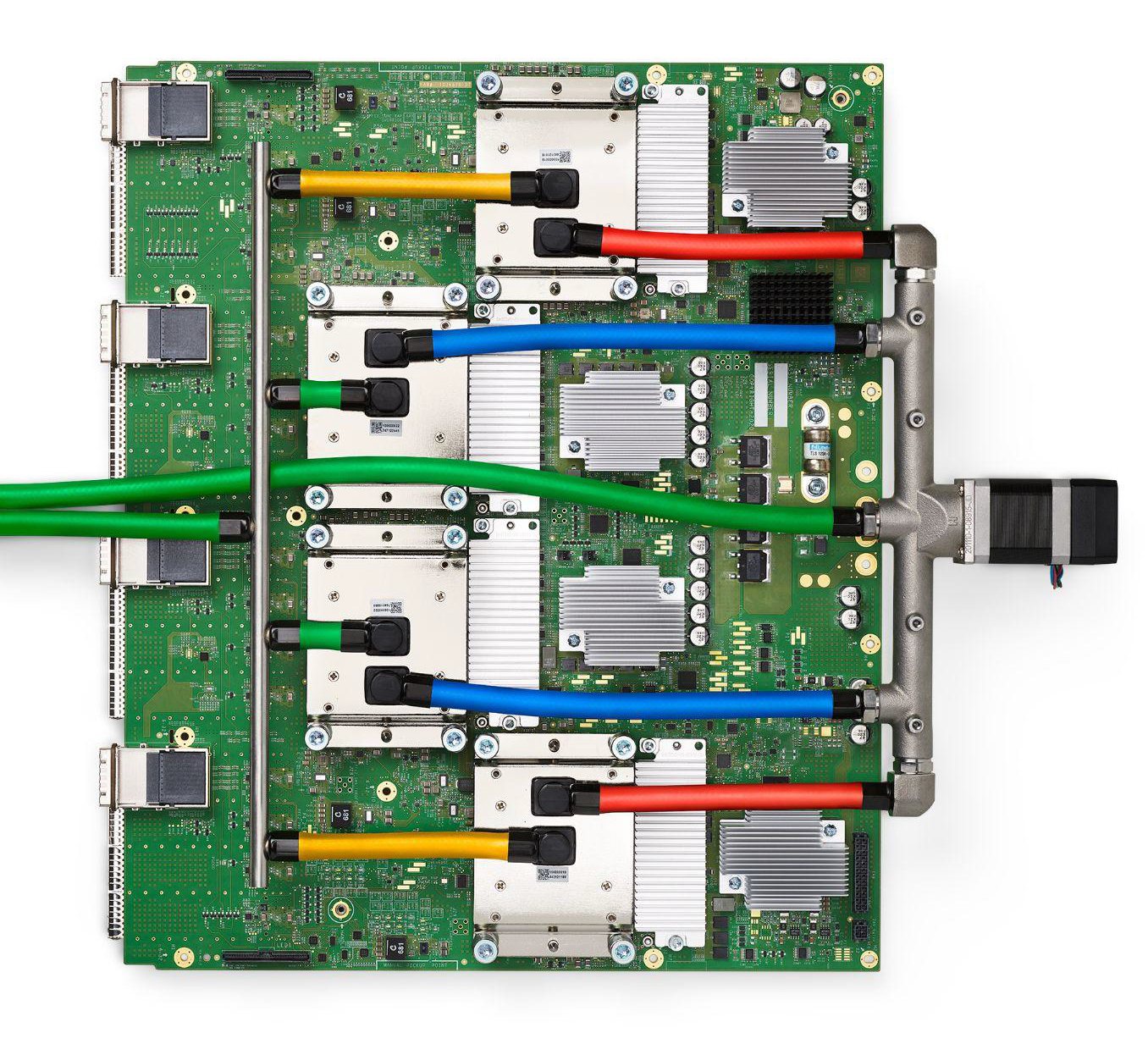
Backlog supports the spending but does not remove the timing problem. Google Cloud ended the last quarter with a USD 514 billion order book, and Bank of America expects cloud growth to accelerate to 93 percent, helped by incremental capacity and the first external sales of TPU systems. Reports that Google has been prioritising scarce compute for internal DeepMind models, if accurate, are the more consequential risk for enterprise buyers: a contract with a cloud provider is not the same thing as a guaranteed slot on a rack.
For hardware buyers the read-through is allocation, not demand. When a hyperscaler finances its own silicon and sells capacity in tranches, the parts that tighten first are the ones that only that silicon needs: HBM stacks, advanced substrates, retimers, high-current power stages and liquid-cooling quick disconnects. Second-tier buyers of the same components then compete for residual capacity, usually at spot premiums and with shorter price validity.

Our advice for 2027 builds is to split the bill of materials by single-source risk and to negotiate the single-sourced items first. Embedded and industrial designs that share components with accelerator boards should assume that quoted lead times will extend whenever a cloud provider raises capex guidance. Our component catalogue covers interface and power parts for those builds, including the TPS55288 36V 16A buck-boost converter and the RTL8211F gigabit PHY, with ladder pricing published for volume planning.